What Is a Hair Stylist in Film?
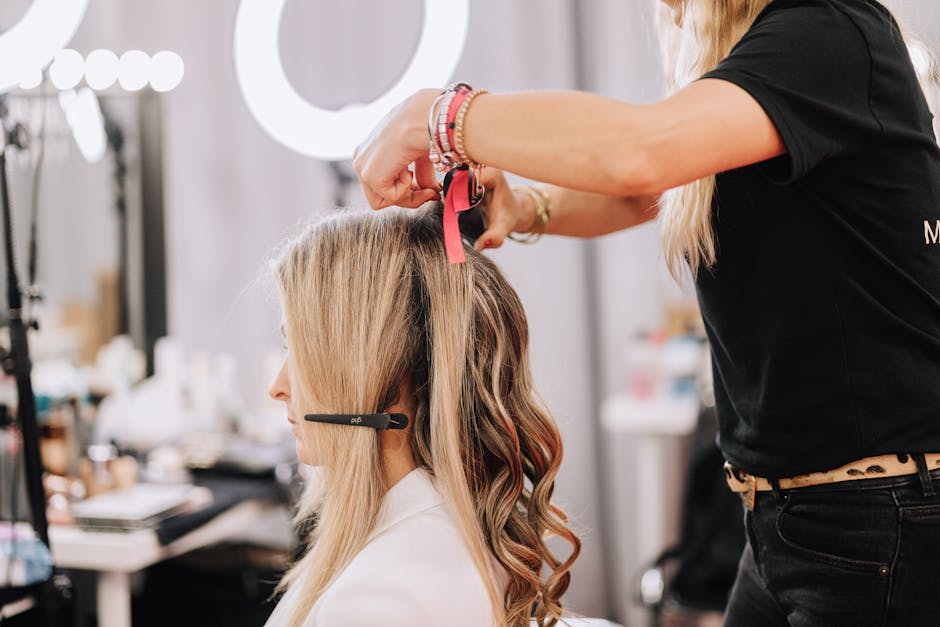
A film set isn’t a salon — it’s a continuity problem that runs for months. One wrong part, one shade off on a wig, and the editor finds the error three weeks after the scene was shot.
A film hair stylist is a licensed hair professional responsible for creating, executing, and maintaining every hairstyle seen on camera. They work within the hair and makeup department, assigned to specific cast members, ensuring each actor’s look matches exactly across shooting days, locations, and reshoots that may happen months apart.
Hair stylists work on theatrical features, network and streaming television, commercials, and music videos. On union productions in the United States, they are covered by IATSE Local 706, the Make-Up Artists and Hair Stylists Guild.
What does a hair stylist do in film?
What Does a Film Hair Stylist Do?
The role spans three distinct phases of production:
Pre-Production
The stylist joins the crew one to three weeks before principal photography on a mid-sized feature — longer on period productions. During prep they:
- Read the full script, flagging every scene with hair implications: period settings, action sequences where wigs must hold through stunts, water scenes that will destroy a blow-out, aging arcs where a character’s hair changes across the story
- Conduct character consultations with each assigned actor — learning their natural texture, growth patterns, product sensitivities, and their own instincts about how the character should look
- Research historical photographs and archival footage for period productions
- Source, order, and custom-fit wigs from rental houses or wig makers; high-end productions require wig ventilating (hand-knotting individual hairs into a lace base for a convincing hairline in close-ups)
- Build a continuity bible for each character: approved photographs, product lists, tool settings, and scene-by-scene notes
Production
The shoot day begins in the makeup trailer, typically 90 minutes to three hours before the first shot. Responsibilities on set include:
- Executing the approved look for each assigned cast member within the AD department’s call schedule
- Shooting continuity photographs before an actor leaves the chair and before every significant scene change — front, both profiles, and back — stored by scene and date
- Standing by for “last looks”: the final check of every actor’s appearance immediately before the director calls action
- Monitoring between takes for anything that disrupts the hair — sweat, wind, physical performance, costume contact — and correcting silently and quickly
- Managing wig application and removal between set-ups, using wig tape, bobby pins, and clips in combinations that hold through physical action but read as natural on camera
Wrap
At day’s end: remove and clean all wigs and hairpieces, reset them for the next use, inventory products, and update the continuity bible. At the end of principal photography, clean and inventory all rental wigs for return and wrap out the kit.
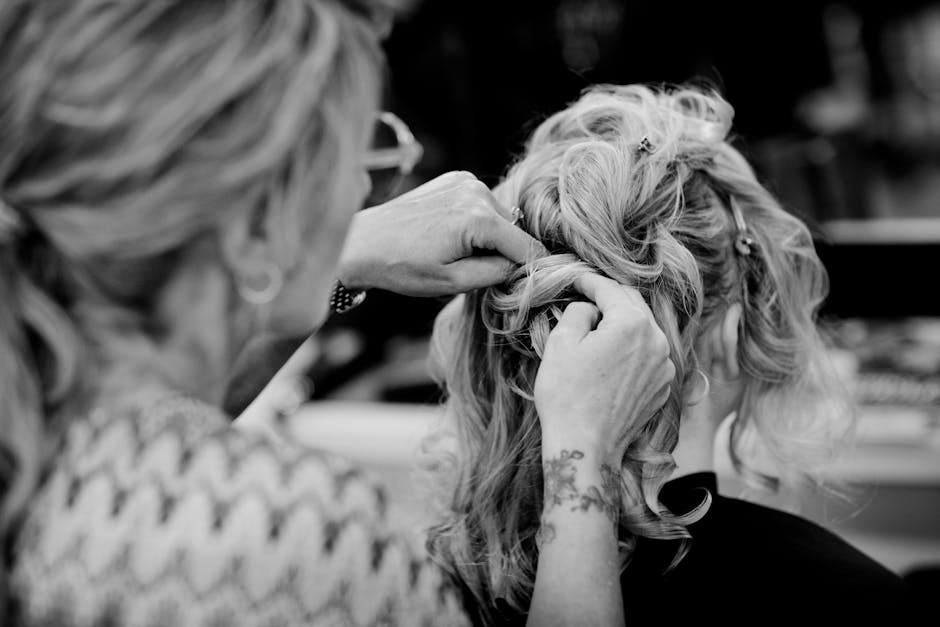
Key hair stylist vs hair stylist
Key Hair Stylist vs. Hair Stylist: What’s the Difference?
These two credits describe distinct roles with different authority and responsibilities:
| Key Hair Stylist | Hair Stylist | |
|---|---|---|
| Also called | Department Head (Hair), Head Hair Stylist | On-set Hair Stylist |
| Reports to | Production Designer / Director | Key Hair Stylist |
| Start date | First in the department, weeks before other stylists | Joins closer to principal photography |
| Designs | Creates all character hair designs | Executes designs assigned by the key |
| On-set | Handles one or two principal actors | Assigned to specific cast members |
| Guild designation | IATSE Local 706 — Department Head | IATSE Local 706 — Hair Stylist |
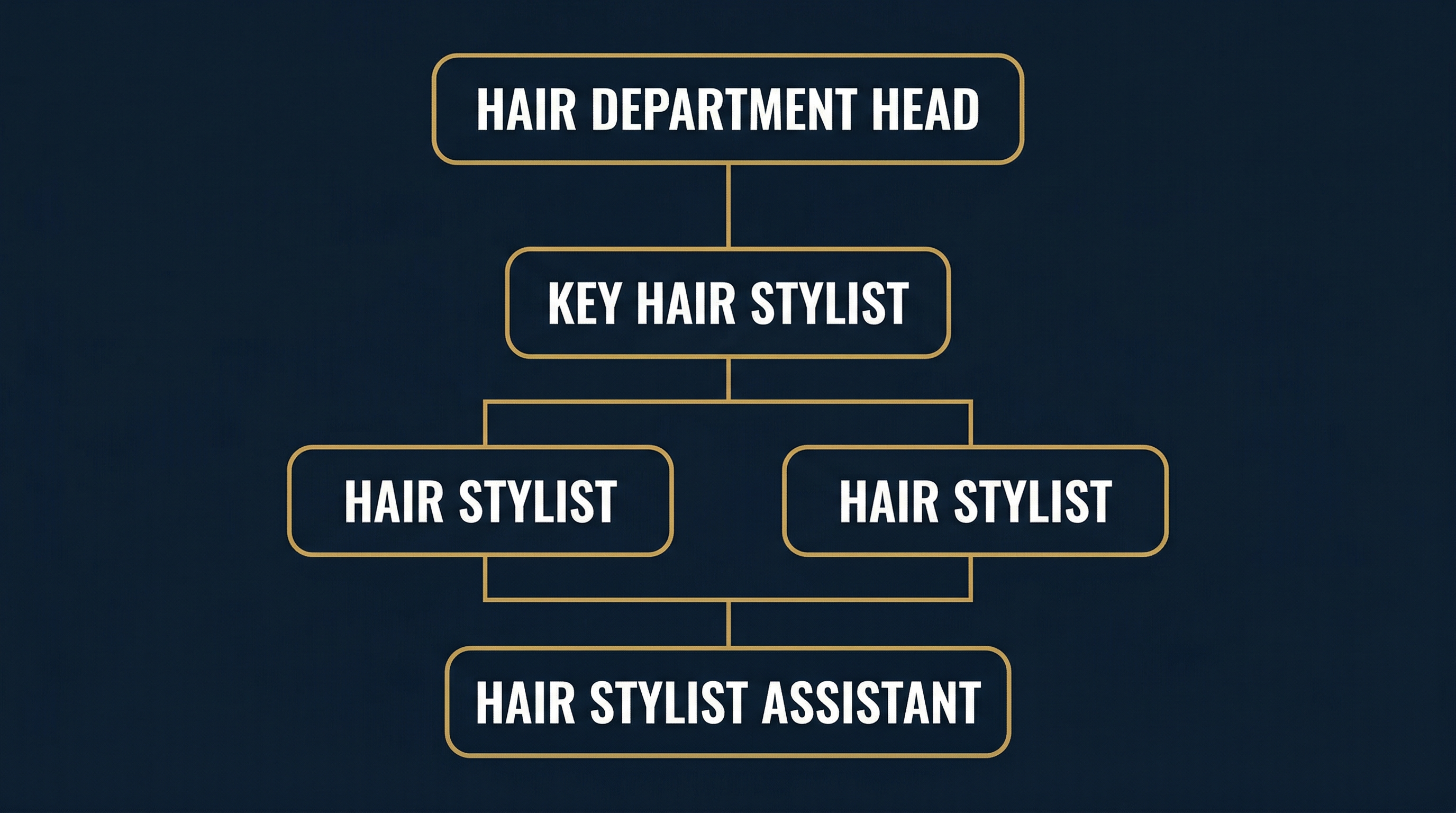
The Key Hair Stylist runs the department: supervising assistants, coordinating with the makeup department, managing the departmental budget, and holding direct creative responsibility to the production designer and director. On large studio productions, this role may be called the Hair Department Head.
Individual hair stylists carry out the designs. On large productions, multiple stylists are hired simultaneously, each assigned to a group of cast members.
Hair stylist film credits
Where Does the Hair Stylist Appear in Film Credits?
The hair department appears in the end credits under its own departmental heading. On most productions, the credit block looks like this:
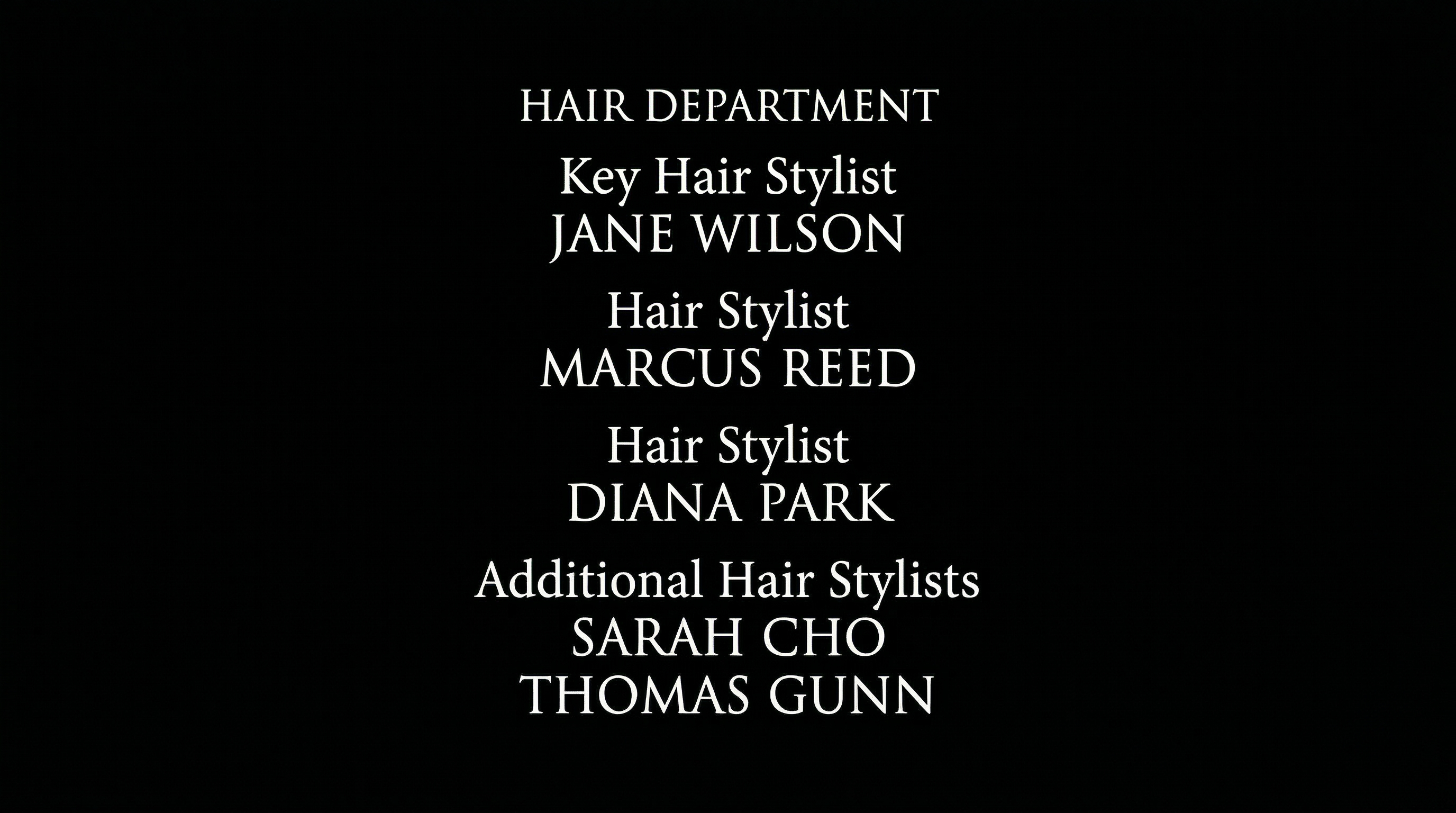
HAIR DEPARTMENT

Key Hair Stylist ............. JANE WILSON
Hair Stylist ................. MARCUS REED
Hair Stylist ................. DIANA PARK
Additional Hair Stylists ...... SARAH CHO
                               THOMAS GUNN
Credit order within the department:
- Key Hair Stylist (or Hair Department Head — see below)
- Hair Stylists (in order of their call-sheet hierarchy, or by name negotiation)
- Additional Hair Stylists
- Hair Stylist Assistants / Trainees (on larger productions)
Department head credit variants:
The top credit in the hair department uses different titles across production types:
- Key Hair Stylist — standard feature and television credit
- Hair Department Head — common on large studio productions and prestige television
- Hairdresser — older credit style, still seen on some international co-productions
- Hair Designer — occasionally used when the department head has unusual creative authority on a fantasy, sci-fi, or period project
Opening credits: The hair department does not appear in main titles on most productions. Exceptions exist on major studio features where the Hair Department Head has a negotiated single card — this is governed by individual contract, not guild minimums.
Guild credit requirements (IATSE Local 706):
Local 706’s Basic Agreement specifies minimum credit provisions for covered productions. Key provisions include:
- The Hair Department Head is entitled to a screen credit on all covered theatrical and television productions
- Credit must appear in the end credits in no less than 35% of the size used for the director’s credit
- The production cannot use a possessory or “created by” credit that displaces the department head’s technical credit
On non-union productions, credit format is at the producer’s discretion — but industry convention still follows the departmental block structure above.
How to credit a hair stylist correctly
How to Credit the Hair Department
The most common mistake in hair department credits is inconsistent title usage — particularly mixing “Key Hair Stylist” and “Hair Department Head” for the same person across different documents.
Standard credit formats:
For a production with one senior stylist:
Key Hair Stylist
PATRICIA NGUYEN
For a large department with multiple stylists:
Hair Department Head
PATRICIA NGUYEN

Key Hair Stylists
DAVID FLORES
RACHEL STONE

Hair Stylists
JAMES OKAFOR
TINA WALSH
Common variations and when to use them:
- Use Hair Department Head when the production employs multiple key-level stylists under one supervisor
- Use Key Hair Stylist when there is a single department head with no secondary key-level crew
- Additional Hair Stylists is the standard catch-all for day players and episodic stylists who worked fewer days
- If one person served as both Hair Stylist and Makeup Artist — common on low-budget shoots — list both functions: “Hair & Makeup: ANNA JAMES” or credit them once in whichever department was their primary role, with a note
Hair stylist vs. makeup artist
Hair Stylist vs. Makeup Artist: Where the Roles Overlap
On major productions, hair and makeup are separate departments with separate department heads. The Hair Department Head coordinates with the Key Makeup Artist (also called the Makeup Department Head), sharing the makeup trailer and aligning on the overall character look — but each runs their department independently.
On low-budget features, shorts, and independent productions, a single artist often covers both hair and makeup. This person is typically credited as Hair and Makeup Artist or Hair & Makeup Stylist, with a single credit line.
The makeup artist role and the hair stylist role share the same IATSE local — Local 706 covers both disciplines — which is why the two departments are often grouped together administratively even when they operate separately on set.
Notable hair stylists in film history
Notable Film Hair Stylists
Sydney Guilaroff (1907–1997) — MGM’s head hairstylist from 1934 to 1978, responsible for the looks of Joan Crawford, Judy Garland, Ava Gardner, Elizabeth Taylor, and dozens of other major stars. Guilaroff is often credited as the first Hollywood hairstylist to receive an on-screen credit — a precedent that took decades to become standard practice.
Lynda Gurasich — Multiple Emmy winner for her work on Dallas in the 1980s and later on Prison Break. Gurasich is cited by working stylists as one of the people who helped establish the department head’s claim to individual screen credit rather than a generic “Hair by [Salon]” acknowledgment.
Kim Kimble — Hair Department Head on Black Panther: Wakanda Forever (2022), responsible for designing natural hair-forward looks that aligned with the film’s Afrofuturist aesthetic. Kimble’s work on the film drew widespread attention to the hair department’s contribution to visual world-building.
Sources & Further Reading
- IATSE Local 706 — Make-Up Artists and Hair Stylists Guild — official union site, contract terms and minimums
- Backstage: Key Hairstylist Explained — industry-facing overview of the key role
- Indeed: How to Become a Film Hairstylist — career path overview
Create Professional Credits with EndCreditsPro
The hair department credit block — with the right title variants, correct order, and guild-compliant sizing — is one of the most commonly formatted incorrectly. EndCreditsPro generates broadcast-ready end credits with the correct departmental hierarchy built in, so your hair department gets credited exactly as they expect to see it.
Generate guild-compliant film credits →
See also: Makeup Artist, Special Effects Makeup Artist, Wardrobe Supervisor, Dialogue Coach — other below-the-line credits that appear in the same end credit scroll. Read the complete guide to film credits format and order for the full departmental hierarchy.
For IATSE compliance requirements: IATSE Credits & Guild Rules